
Constantia Glen Red Wines
Two Bordeaux-style blends, one distinctive sense of place.
At Constantia Glen, we produce two Bordeaux-style red blends, the Constantia Glen THREE and the Constantia Glen FIVE. Named for the number of grape varieties in each blend, they offer two distinctive expressions of our estate and its cool-climate vineyards.
The Constantia Glen THREE is a Merlot-driven blend with Cabernet Franc and Cabernet Sauvignon. Elegant and fruit-forward, it combines bright, red-fruit flavours with a savoury complexity and velvety tannins. Its generous character makes it inviting in its youth, while retaining the freshness and structure that define our Constantia Glen reds.
Our flagship wine, the Constantia Glen FIVE, brings together five classic Bordeaux red varieties: Cabernet Franc, Cabernet Sauvignon, Merlot, Petit Verdot and Malbec. Rich and concentrated, it balances dark-fruit flavours with freshness and finesse. Fine-grained tannins lend texture, structure and a lingering finish, creating a wine with the depth to develop beautifully in bottle.
From vineyard to bottle
All the Constantia Glen wines are estate wines. Meaning the grapes are grown on the estate, with the production and bottling taking place on the property. We therefore have full control of every step in the production journey, ensuring the wine that is bottled is of the best possible quality.
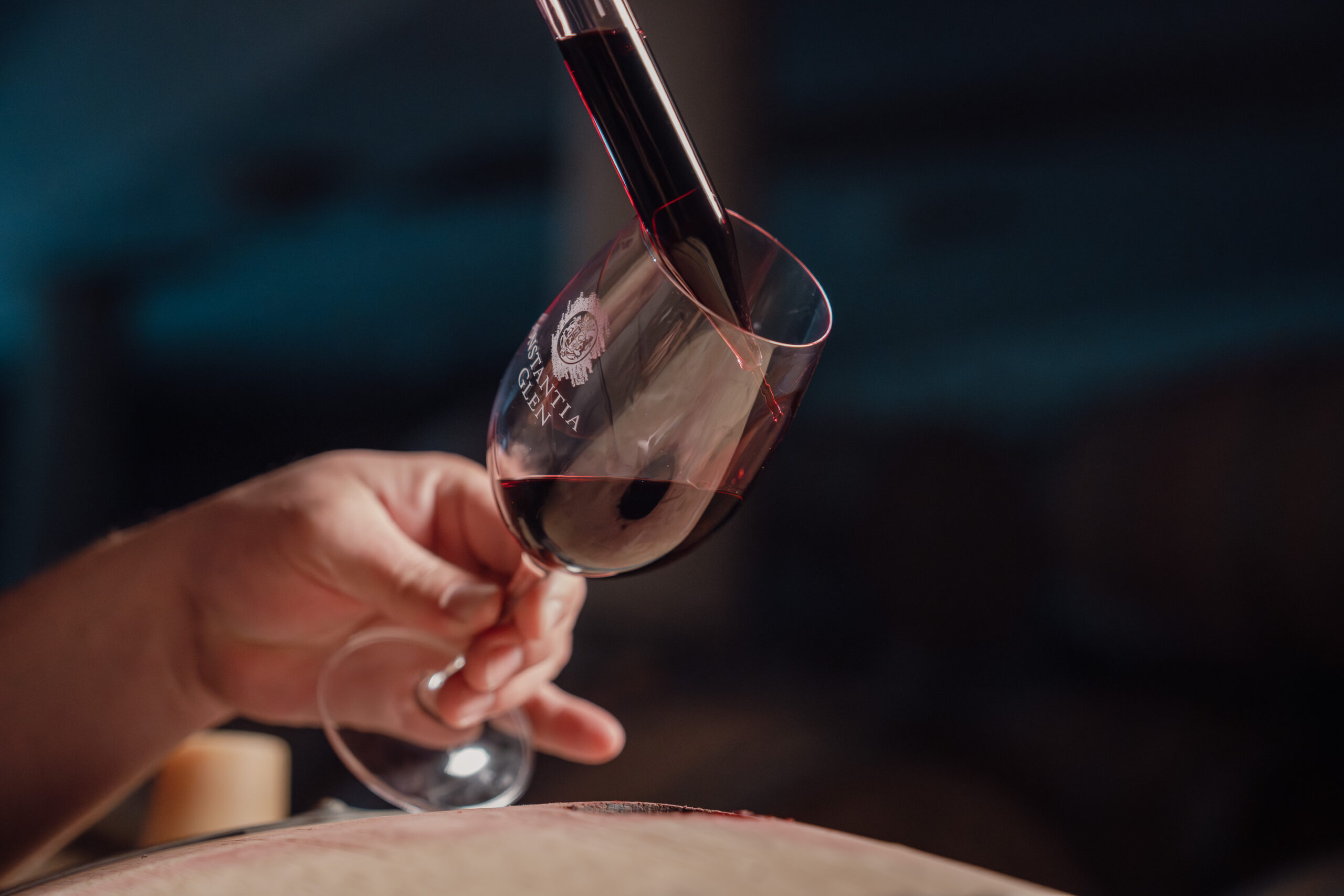
Both red blends begin with the same meticulous approach: hand-harvested grapes, meticulous bunch and berry sorting, and separate vinification of individual lots. The young wines mature as separate components for eight months in 225L French oak barrels before our winemaking team undertakes the detailed process of tasting every component to decide on the final blends. This allows each lot to reveal its character and helps the team select the components that best express the style of the Constantia Glen THREE and FIVE. Once the final blends are decided, the blended wines are then put back into barrels to mature for a further 10 months before bottling.
The timeline
The red wine harvest usually begins early to mid- March, and the last grapes (usually Cabernet Sauvignon) are generally picked between 10 and 15 April. Of course, every vintage is different, and the picking dates depend on the season, weather conditions, as well as the taste and phenolic ripeness of the grapes. For some recent vintages, we have had all the grapes in the cellar by the end of March.
Once fermented and pressed (in our basket press), the red wines mature in 225L French oak barrels for a total of 18 months, followed by one year of bottle maturation before the wine enters the market. That is a three-year timeline from grape to shelf!
Why our cool-climate site suits red wine
The secret lies in our position just below Constantia Nek. Cradled between the Constantiaberg and Table Mountain ranges, the sun sets in the gap between the two mountain ranges, giving our vineyards an hour more of sunlight than the surrounding area, each day during the growing season. Our predominantly north and north-east-facing slopes benefit from this late-afternoon sunlight, while cool maritime breezes help moderate vineyard temperatures.
This combination of daylight hours, solar radiation, aspect, altitude, proximity to the cold Atlantic Ocean and its cool ocean breezes supports slow and even ripening, allowing our red grape varieties to develop complex flavour precursors and fruit concentration while retaining freshness. It is this balance that helps shape our reds’ elegance and structure.
Our location gives us a distinctive expression within the Constantia Valley: a site where Bordeaux varieties can ripen fully while preserving the vibrant character and freshness of a cool-climate wine.
Two expressions, one philosophy
The Constantia Glen THREE offers a generous, medium-bodied introduction to our red blends, while the Constantia Glen FIVE is our more structured, full-bodied and denser expression, with the texture and depth to reward careful cellaring. Both reflect the same philosophy: meticulous vineyard work, thoughtful blending and wines that remain true to the place in which they are grown.
